Historic Home Renovations: Balancing Preservation with Art Display Requirements




Key Takeaways
- Regulatory differences matter: Houston's Landmark and Protected Landmark designations require Certificates of Appropriateness for modifications, while Highland Park and University Park lack formal preservation ordinances, placing responsibility on individual homeowners.
- Reversibility is essential: Following the Secretary of the Interior's Standards, all art display modifications should be removable without permanent damage to historic fabric.
- Modern technology enables preservation: LED lighting, wireless picture lights, microclimate frames, and traditional picture rail systems allow museum-quality display without compromising historic interiors.
- Climate control requires targeted solutions: Houston's humidity and Dallas's temperature swings demand localized environmental management rather than wholesale HVAC replacement.
- Early collaboration prevents costly revisions: Engaging art advisory during schematic design allows infrastructure planning rather than retrofitting.
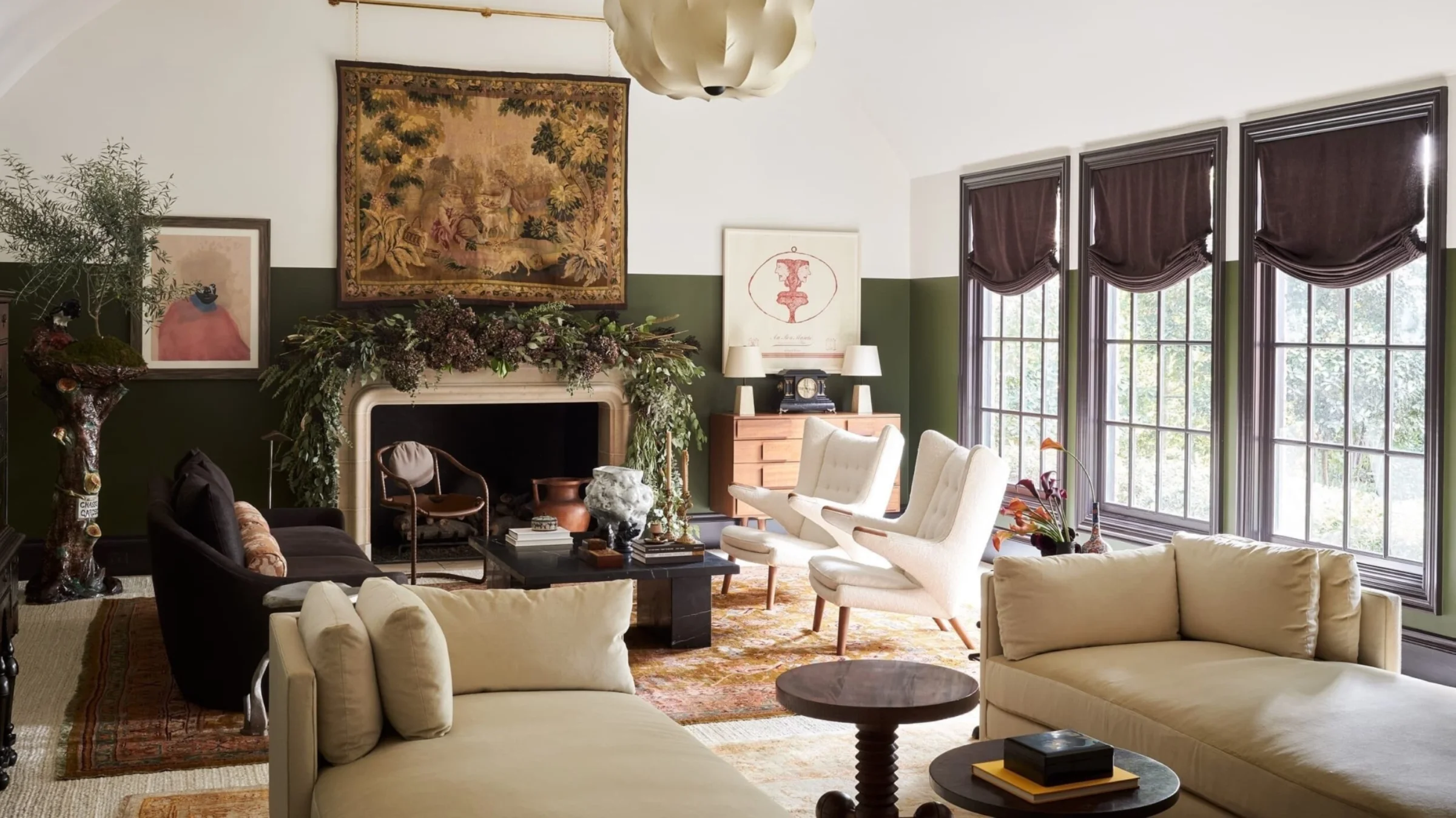
For architects working on historic properties in Houston's River Oaks or Dallas's Highland Park, few challenges are as nuanced as integrating modern art display systems into homes where every architectural detail carries significance. These neighborhoods represent some of Texas's most distinguished residential architecture, with estates designed by luminaries like John Staub, Birdsall Briscoe, and Cameron Fairchild. Preserving this legacy while meeting contemporary collectors' needs for proper art display requires a thoughtful approach that honors both preservation principles and curatorial best practices.
At C2 Art Advisors, we partner with architects and interior designers to navigate these complexities, ensuring that art installations enhance rather than compromise a home's historic character. This guide offers practical strategies for achieving that balance.
Understanding the Regulatory Landscape
Houston and Dallas approach historic preservation differently, and understanding these distinctions is essential before planning any modifications. Houston's Office of Preservation administers the city's Historic Preservation Ordinance, which governs Landmark, Protected Landmark, and Historic District designations. River Oaks itself is not a designated Historic District, but it contains numerous individually designated Landmark and Protected Landmark homes on streets including Del Monte, River Oaks Boulevard, Inwood, and Inverness. For these properties, exterior alterations require a Certificate of Appropriateness (COA), and even interior modifications that affect character-defining features merit careful consideration.
Highland Park and University Park present a different scenario. These municipalities currently lack formal historic preservation ordinances, meaning individual homeowners bear greater responsibility for preservation decisions. Organizations like Preservation Park Cities work to educate homeowners about architectural significance, but without regulatory teeth, preservation ultimately depends on owner commitment. This flexibility offers more latitude for interior modifications, though conscientious architects often choose to follow Secretary of the Interior's Standards voluntarily to maintain property value and neighborhood character.
The Reversibility Principle
The Secretary of the Interior's Standards for the Treatment of Historic Properties provide the gold standard for preservation work nationwide. Standard 10 is particularly relevant for art display installations: "New additions and adjacent or related new construction shall be undertaken in such a manner that if removed in the future, the essential form and integrity of the historic property and its environment would be unimpaired."
This reversibility principle should guide every art display decision in a historic home. Whether installing track lighting, picture rails, or climate control systems, the question remains constant: Can this modification be removed without leaving permanent damage to historic fabric? Fortunately, modern art display technology offers numerous solutions that satisfy both curatorial requirements and preservation ethics.
Lighting Solutions for Period Interiors
Proper art lighting presents one of the most common challenges in historic homes. Many River Oaks estates feature original fixtures, plaster ceilings, and decorative moldings that cannot be compromised for recessed lighting. Meanwhile, the art itself demands illumination that delivers high color rendering (CRI 90 or above) without harmful UV exposure or excessive heat.
Several approaches satisfy both requirements. Surface-mounted track systems can be designed to complement existing architectural detailing rather than compete with it. When installed along crown molding lines or within ceiling coffers, track lighting becomes nearly invisible while providing the adjustability that evolving collections require. For particularly sensitive installations, wireless battery-powered picture lights eliminate the need for any new electrical penetrations, though they require regular maintenance.
LED technology has transformed art lighting in historic contexts. Modern LEDs produce minimal heat, emit virtually no UV radiation, and can be tuned to match the warm color temperatures that complement period interiors. Frame-mounted LED fixtures provide focused illumination without any ceiling modifications, making them ideal for designated Landmark properties where ceiling alterations would require regulatory approval.
Climate Control Considerations
Houston's subtropical humidity and Dallas's temperature swings pose significant conservation challenges. Museum standards recommend maintaining artwork at 70°F with 50% relative humidity, conditions that may conflict with a historic home's original HVAC infrastructure or complete lack thereof.
Rather than wholesale HVAC replacement, consider targeted solutions for primary display areas. Localized humidity control through portable dehumidifiers or humidifiers can maintain appropriate conditions in specific rooms without system-wide modifications. For particularly valuable works, microclimate frames provide individual environmental control within the frame itself, requiring no modifications to the home's structure or systems.
When HVAC upgrades are unavoidable, ductwork can often be routed through closets, attic spaces, or converted servant passages common in older homes. Working with contractors experienced in historic properties ensures that necessary mechanical improvements respect the building's architectural hierarchy.
Hanging Systems and Wall Treatments
Historic plaster walls require hanging methods that distribute weight appropriately and minimize penetrations. Traditional picture rails, which many period homes already possess, offer an ideal solution. These moldings, typically installed near the ceiling line, allow artwork to hang from adjustable hooks and cables without any wall penetrations. For homes lacking original picture rails, reproduction moldings can be added using reversible attachment methods.
When wall mounting is necessary, understanding the wall construction is essential. Lath and plaster walls common in pre-war construction require different anchoring approaches than modern drywall. Toggle bolts designed for hollow plaster walls distribute weight across a larger area, reducing stress on fragile historic materials. For particularly heavy works, consultation with a structural engineer ensures that mounting doesn't compromise wall integrity.
Security considerations add another layer of complexity. Seismic hooks and security hangers can be installed discreetly, protecting valuable works without visible hardware that detracts from period aesthetics. These systems become particularly important for works on paper and photography, which require UV-protective glazing that adds significant weight to framed presentations.
Integrating Contemporary Art with Period Architecture
Some of the most successful historic home collections pair contemporary art with period interiors, creating dynamic dialogues between past and present. A Color Field painting can activate a formal living room in ways that period-appropriate decorative art cannot, while sculpture by contemporary artists often benefits from the visual breathing room that gracious historic proportions provide.
The key lies in respecting both the art and the architecture. Scale matters enormously; oversized works that overwhelm intimate period rooms rarely succeed, while appropriately scaled works enhance spatial qualities the original architects intended. Placement should acknowledge existing architectural focal points rather than competing with them. A fireplace mantel, bay window, or built-in bookcase already commands attention; artwork should complement rather than conflict with these features.
This curatorial sensibility is where experienced art advisory guidance proves invaluable. At C2 Art Advisors, our residential art curation services help architects and their clients select works that honor both the home's heritage and the collector's vision. We understand how light moves through period rooms, how ceiling heights affect viewing distances, and how material choices in framing can bridge contemporary content with historic context.
Documentation and Long-Term Planning
Any modifications to a historic property should be thoroughly documented, both to satisfy potential regulatory requirements and to inform future stewards of the home. Photographic documentation before, during, and after installation creates a record that can guide future restoration efforts. Maintaining files on specific products used, manufacturers, and installation methods ensures that repairs or replacements can match original specifications.
Collection planning in historic contexts also requires thinking generationally. Art collections evolve, but the best installation infrastructure anticipates change while minimizing cumulative impact on historic fabric. Flexible systems that accommodate different sizes and media reduce the need for future modifications, while comprehensive collection management ensures that documentation accompanies each work through successive owners.
The Collaborative Approach
Successfully integrating art into historic homes requires collaboration among architects, interior designers, art advisors, and conservation specialists. Each professional brings essential expertise: the architect understands structural implications and regulatory requirements; the designer ensures aesthetic cohesion; the art advisor provides curatorial direction and market knowledge; and the conservator ensures that display conditions protect the works themselves.
Early involvement of all parties prevents costly mid-project revisions. When art advisory is engaged during schematic design rather than after construction, infrastructure can be planned rather than retrofitted. Electrical capacity for lighting, structural support for heavy works, and HVAC zoning for climate-sensitive areas all benefit from advance planning.
Preserving Legacy While Building Collections
Historic homes in River Oaks and Highland Park represent irreplaceable architectural heritage. As these properties increasingly become homes for significant art collections, thoughtful integration becomes essential. The goal is not merely to display art in historic settings, but to create environments where architecture and art elevate each other.
C2 Art Advisors brings decades of experience to these sensitive projects, working alongside architects to ensure that collection development and display infrastructure honor both preservation principles and curatorial excellence. Whether you're beginning a new collection in a recently acquired historic property or enhancing an existing collection in a family estate, our team provides the expertise necessary to navigate these complex decisions. Contact us to discuss how we can support your next historic home project.


Begin a Conversation About Your Collection
Tell us about your space, your team, and the regional voice you want on your walls. Initial consultations are complimentary and discreet — and always begin with a conversation, not a pitch.